
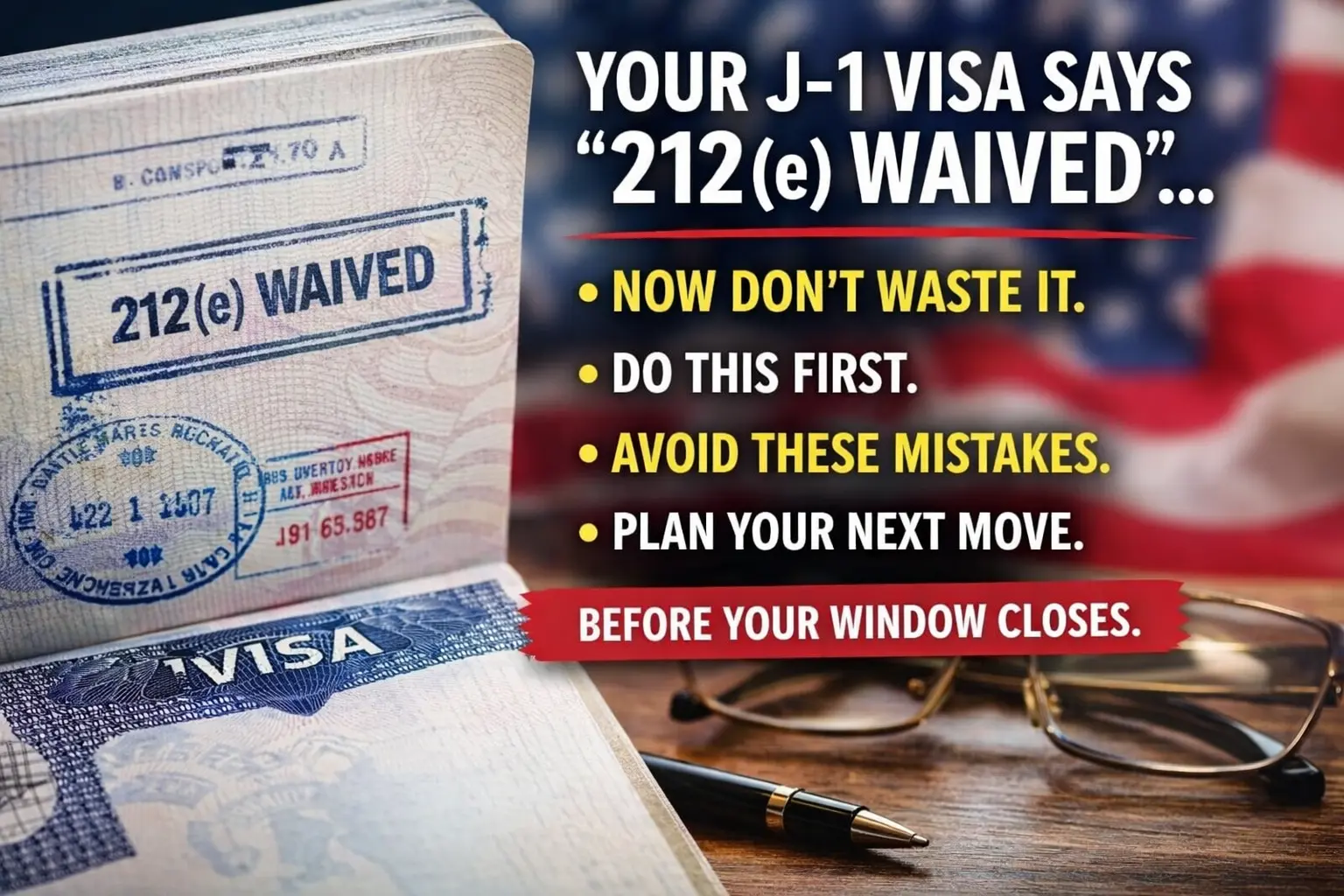
What It Means — What To Do Next — and How Not to Waste the Opportunity
What to Do — What NOT to Do — and How Not to Waste This Opportunity
If you are a J-1 teacher and your visa stamp shows “212(e) waived,” pause for a moment.
That small line in your passport is not decoration.
It is one of the most powerful immigration advantages a J-1 teacher can have — and many teachers accidentally waste it because they don’t understand what it actually means.
This guide is here to protect you.
Let’s break it down simply.
Quick refresher: What is the 212(e) rule?
Many J-1 teachers are subject to the two-year home residency rule (also called 212(e)).
This means:
You must return to your home country for 2 years before you can apply for certain U.S. visas or a green card (unless you qualify for and receive a waiver).
Not all J-1 teachers are subject to it — but many are.
That’s why the words on your visa stamp matter.
First: What Does “212(e) Waived” Actually Mean?
Normally, J-1 teachers are subject to the two-year home residency rule. This means:
You must return to your home country for 2 years before applying for certain U.S. visas or a green card.
But if your passport shows:
“Bearer is not subject to 212(e)”
or
“212(e) waived”
it means:
You are no longer bound by that rule.
You are free to pursue long-term U.S. immigration options without waiting two years at home.
This is huge.
It opens doors that most J-1 teachers do not have.
And that’s why you must treat it carefully.
Important: “Not Subject” vs “Waived” (what’s the difference?)
Both statements give you freedom from the 212(e) home residency rule — but they mean two different stories:
If your visa says “Bearer is not subject to 212(e)”
This means you were never required to do the two-year home residency rule in the first place.
If your visa says “212(e) waived”
This means you were originally subject to the rule — but you applied for a waiver and it was approved, so the rule no longer applies to you.
Either way, the big message is the same:
You have a rare opportunity most J-1 teachers do not have.
But you can still waste it if you don’t plan.
What You SHOULD Do Immediately
1. Confirm Your Waiver / Status Is Official
Do not assume.
Double-check your approval notice and records.
If you are waived, you should have:
- A waiver approval letter
- DOS recommendation confirmation
- USCIS approval notice (I-612 or I-797)
Keep digital and printed copies.
If you are not subject, you may not have waiver documents — because you didn’t need to apply.
But if you are unsure whether your status is properly recorded or reflected in your immigration file, you may need an advisory opinion to confirm your status.
Here’s a step-by-step guide on how to request one:
👉 https://www.pinoyteacherstories.com/do-you-need-an-advisory-opinion-for-your-j-1-visa-heres-when-and-how-to-request-one/
This protects you from future surprises.
2. Talk to a Qualified Immigration Lawyer Early
Not when your visa is expiring.
Not when you are panicking.
Now.
A teacher who is not subject or waived has options that require strategy:
- Employment-based green card
- Employer sponsorship
- NIW pathway
- Other immigrant routes
If you need a trusted attorney referral, email:
apply@teach-usa.net
Subject: Atty Referral
Timing matters.
Filing too late can trap you.
Filing too early without strategy can also cause problems.
Professional guidance protects your future.
3. Start Building Your Immigration Evidence Now
Even if you don’t file immediately.
Start documenting:
- Awards and recognitions
- Leadership roles
- Student impact data
- Community involvement
- Professional development
- Research, publications, presentations
- Letters from administrators
Immigration cases are built on evidence, not good intentions.
Teachers who win long-term cases are the ones who document early.
If you want a free NIW prequalification review and guidance on what evidence to build, email:
apply@teach-usa.net
Subject: NIW
We can help you start preparing while you’re still teaching.
Early preparation makes cases stronger.
What You Should NOT Do
This is where many teachers quietly lose their advantage.
❌ Do NOT Assume You Can Relax
Whether you’re not subject or waived, neither one is permanent status.
It is an opportunity window.
Your J-1 status still has an end date.
If you do nothing, time will run out.
❌ Do NOT Jump Into Random Visa Advice Online
Facebook groups are full of confident misinformation.
Every case is different.
What worked for another teacher may harm your case.
Immigration is not DIY guesswork.
❌ Do NOT Overstay While “Figuring It Out”
Overstaying kills opportunities.
Even if you are not subject or waived.
Once you fall out of status, your clean path disappears.
Stay compliant while planning.
❌ Do NOT Wait Until the Last 6 Months
This is the most common mistake.
Teachers wait.
Then panic.
Then rush.
Immigration strategy takes time:
- Case preparation
- Evidence gathering
- Attorney review
- Filing timelines
Waiting shrinks your options.
The Opportunity Most Teachers Don’t Realize They Have
Being not subject to 212(e) or having a waiver means you are no longer stuck in the temporary loop.
You can build a long-term plan.
You can transition out of the J-1 cycle.
You can pursue stability.
But only if you act intentionally.
This is not about fear.
It’s about not wasting a rare advantage.
Thousands of teachers wish they had what you already have.
A Simple Next Step
If your passport shows not subject to 212(e) or 212(e) waived, your next move should be clarity:
- Understand your visa expiration timeline
- Understand your immigration options
- Build a plan before urgency forces decisions
The best outcomes happen when teachers plan early, not when they panic late.
Final Thought
Not subject. Waived.
Both are powerful.
But neither is the finish line.
It’s the starting gate.
What you do next determines whether this moment becomes:
A missed chance
or
The foundation of your long-term future in the U.S.
Choose carefully. Choose early. Choose informed.
If you’re still in the early stages and want a full overview of the entire process, start with this complete guide on how to teach in the U.S. on a J-1 visa before diving deeper into 212(e) details.