
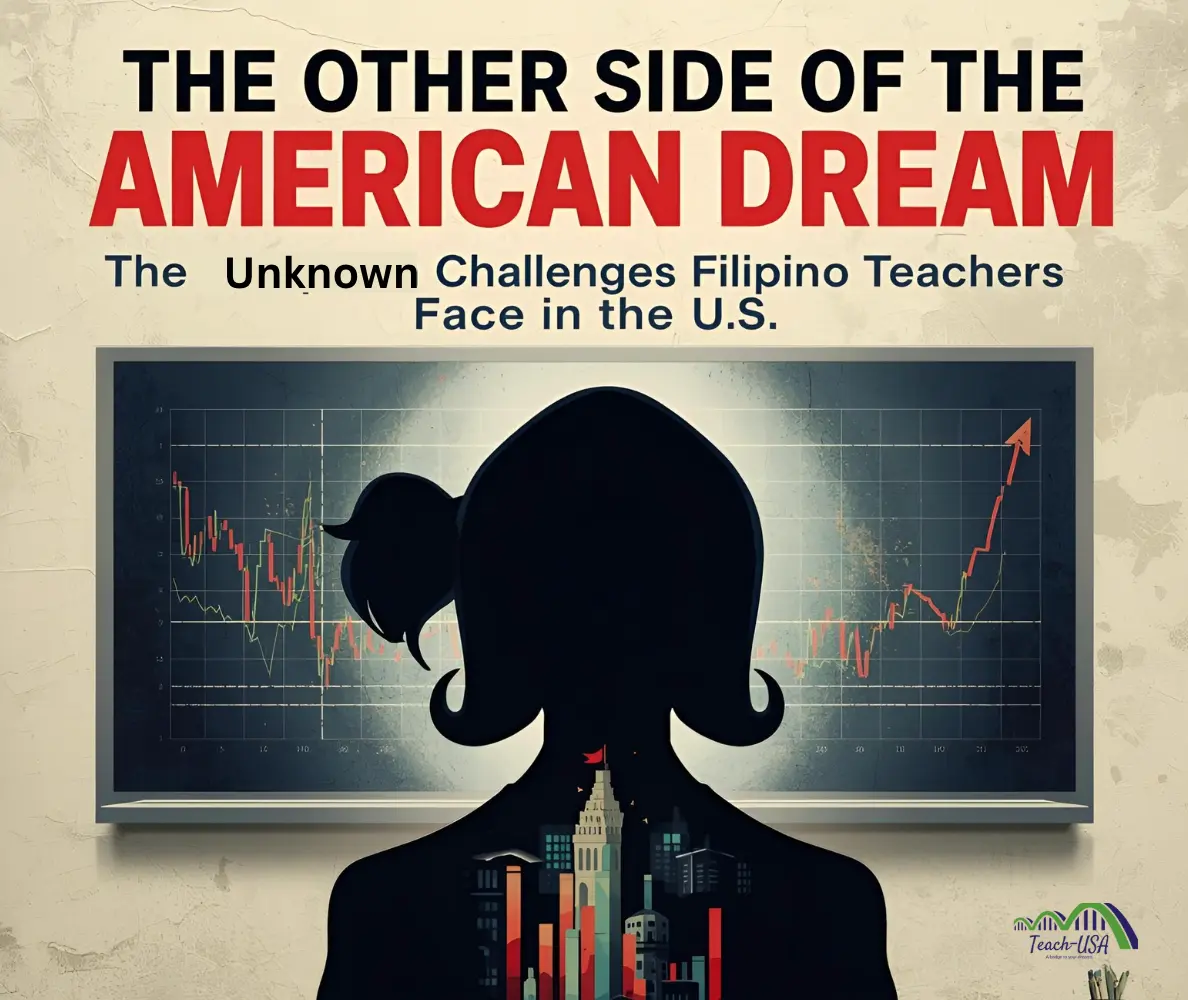
For many Filipino teachers, teaching in the United States feels like a dream come true.
Better pay. International experience. New beginnings. The chance to provide more for family back home. And for many, the opportunity truly changes their lives.
But behind the photos, the success stories, and the grateful posts…
there is another side that rarely gets talked about.
The quiet struggles.
The culture shock.
The emotional weight.
The pressure to stay strong even when things feel heavy.
This post isn’t meant to discourage. It’s meant to tell the truth—with compassion—and offer real ways to survive and not feel so alone in the process.
1. Homesickness That Hits Harder Than Expected
Almost every Filipino teacher expects to miss home. What many don’t expect is how deep and physical that longing can feel.
You’re in a beautiful, organized classroom… but your heart is somewhere else.
You’re celebrating holidays alone while your family gathers without you.
You’re winning professionally, yet grieving personally.
What Helps:
- Build a routine that includes regular calls with family
- Celebrate Filipino holidays with fellow teachers
- Allow yourself to feel sad without guilt — homesickness is not weakness
2. Visa Anxiety and the Fear of “What If?”
Even with a valid visa, many teachers live with constant uncertainty:
- Will I be renewed?
- What happens after my contract ends?
- What if something goes wrong with my sponsor, school, or status?
This stress sits quietly in the background and affects sleep, decisions, and mental health.
What Helps:
- Learn your visa rules early (not when things go wrong)
- Keep copies of all documents
- Build a long-term exit or transition plan—even if it’s just a rough one
3. Culture Shock Inside the Classroom
American classrooms are very different from Philippine classrooms:
- Strong student individuality
- Open disagreement with teachers
- Heavy documentation and compliance
- Behavioral challenges that feel overwhelming
Many teachers silently struggle with:
- Classroom management confidence
- Parent communication
- Special education paperwork
- Fear of being judged or reported
What Helps:
- Ask for support early (mentor teachers, admin, instructional coaches)
- Observe other teachers often
- Focus on progress, not perfection
- Remember: adjustment is not incompetence
4. Loneliness in a Crowded Place
You may be surrounded by people all day… yet still feel deeply lonely at night.
Friendships take time.
Cultural connections are limited.
And sometimes, even Filipino communities feel fragmented.
This isolation can quietly affect:
- Motivation
- Mental health
- Work performance
- Self-worth
What Helps:
- Join teacher groups, church groups, or hobby communities
- Volunteer or join activity clubs
- Create a “third place” outside work and home
5. Financial Pressure Despite Higher Pay
Yes, the pay is higher—but so are:
- Rent
- Insurance
- Transportation
- Taxes
- Remittances to family back home
Many teachers feel pressured to:
- Send money consistently
- Support siblings’ education
- Carry family expectations from afar
Some even end up financially trapped despite earning in dollars.
What Helps:
- Learn the U.S. tax system early
- Set a realistic remittance budget
- Build an emergency fund first before sending extra
- Seek financial education—not just motivation
6. The Pressure to Look “Successful”
Social media shows only the good days:
- New cars
- New homes
- Travel photos
- Smiling classrooms
What it doesn’t show:
- Panic attacks
- Burnout
- Debt
- Relationship strain
- Quiet regret
Many teachers suffer silently because they feel they must always look “grateful.”
What Helps:
- Give yourself permission to be human, not just “blessed”
- Talk to someone you trust
- Understand that struggle does not cancel gratitude
So… Was It Still Worth It?
For many, yes.
For others, it’s been both a blessing and a burden.
And for some, it became a bridge—not a permanent destination.
What matters most is this:
You don’t have to suffer just to prove that coming to the U.S. was “worth it.”
You are allowed to struggle.
You are allowed to plan an exit.
You are allowed to want more stability, not just survival.
Final Thoughts: We Need More Honest Conversations
The American teaching dream is real.
But so are the sacrifices behind it.
If you’re a Filipino teacher in the U.S. feeling:
- Burned out
- Lonely
- Confused
- Afraid about your future
You’re not ungrateful.
You’re human.
And the more we talk about the unspoken challenges, the more we give each other permission to heal, prepare, and move forward with clarity.
A Gentle Invitation
If you’re reading this and you still feel the pull to teach in the U.S.—even after knowing the unspoken challenges—then that courage already says something about you.
Bravery doesn’t mean the absence of fear.
It means you’re willing to move forward anyway.
If you are ready to explore teaching opportunities in the United States, you may send your resume to:
This is simply an open door for those who feel called to take the next step—wisely, informed, and prepared.