J-1 visa

Can financial hardship help you stay in the US?

Can Financial Hardship Help You Stay in the US?

Financial hardship can qualify some J-1 teachers for a 212(e) hardship waiver, but only in specific, well-documented situations. This guide explains who may qualify, what USCIS considers “exceptional hardship,” and what options remain if the waiver is not the right path.

Humanitarian Relief

Humanitarian Relief for J-1 Teachers: Who Qualifies and What to Know

Many J-1 teachers fear returning home when conditions change—whether due to conflict, persecution, or personal threats. This guide explains what “humanitarian relief” really means, who may qualify, and the risks to your J-1 program so you can make informed decisions about safety, status, and next steps.

Is Waiver the Next Best Step?

J-1 With U.S. Spouse/Child: Is WAIVER the Next Best Step?

If you have a U.S. citizen spouse or child, a J-1 waiver may help you stay in the United States and pursue long-term immigration options. But timing matters. Learn the pros of seeking a waiver, why working with an immigration lawyer helps, and when delaying the waiver might actually be the better choice.

NIW

NIW for J-1 Teachers: Myths vs. Truth

Confused about the NIW and how it affects your J-1 visa? Discover the myths and truths every international teacher needs to know before taking the next step.

212e

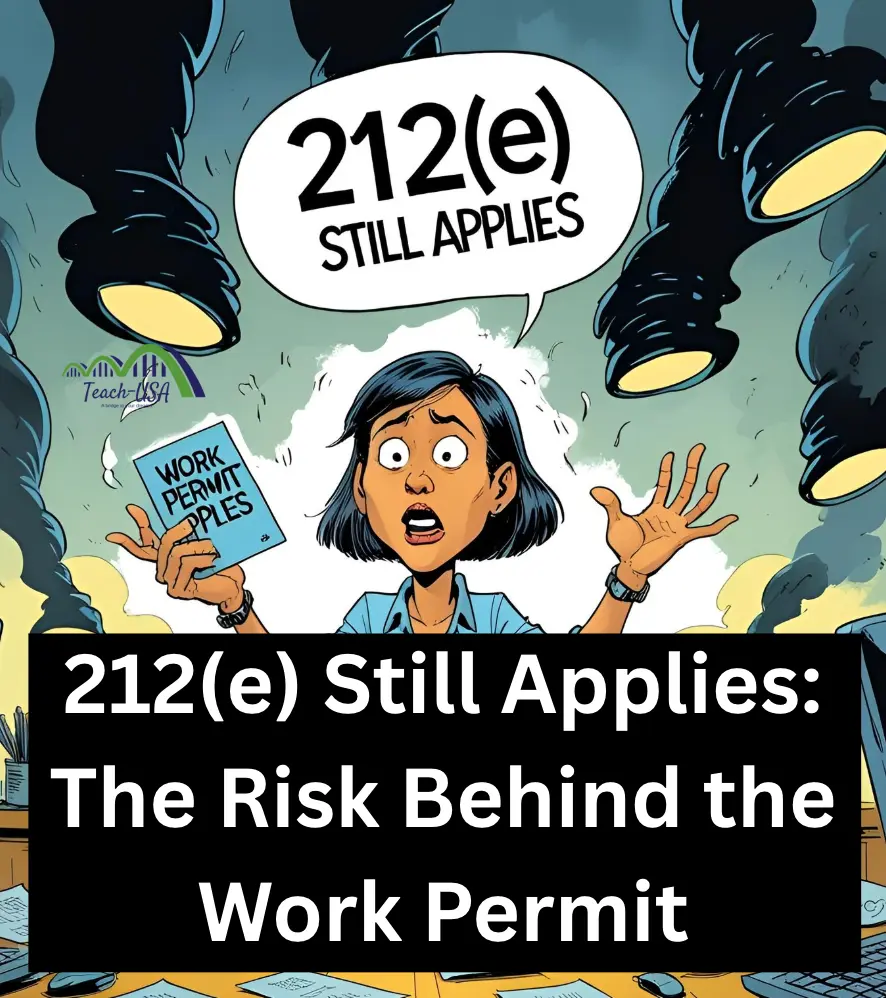
212(e) Still Applies: The Risk Behind the Work Permit

Some J-1 teachers file for EB-1 or EB-2 green cards and receive a work permit while still subject to the 212(e) home residency rule. But a work permit isn’t a visa—and without fulfilling 212(e) or securing a waiver, they risk denial, removal, or being forced to go home. This post explores the hidden risk behind “buying time” and what every teacher needs to know before betting their future on an EAD.

Scroll to Top